Recent Posts

Most Read




Featured Posts
Most Read

Florida’s housing market was skewed wildly by the pandemic. It’s finally coming to grips with a ‘realistic middle ground’
The housing market in Florida is in the midst of a major change: Inventory is down for the first time in 110 weeks, according to Compass chief economist Mike Simonsen. But it’s not for the reason you might think.Recommended VideoFlorida’s housing market was one of the hottest during the pandemic due to the state’s appeal to remote workers, retirees, and investors who relocated from high-cost states like New York and California seeking more space, lower taxes, and lenient COVID restrictions. Between March 2020 and June 2022, prices rose a whopping 51%. Demand was high, so inventory was low. But now, Florida’s inventory levels are dwindling for a very different reason. Experts say that it’s not revived demand, but rampant delistings and fewer new listings that are causing the change. Home prices are down about 5.4% year over year, according to Zillowdata. “Low prices and low demand are making people who aren’t in a hurry simply withdraw listings rather than sell at a low price,” Alexei Morgado, a Florida real estate agent and founder of real-estate exam prep company Lexawise, toldFortune. “Inventory is down, but not because of big sales, but rather because of [delistings] and slow demand. So it’s all a mixed bag.”Realtor.com data for August show some parts of Florida saw nearly 60 homes delisted for every 100 newly listed homes. Miami had the highest delisting-to-listing ratio with about 59, while Tampa had 33 and Orlando had 28.Overall, the number of single-family homes for sale in Florida fell from more than 100,000 in the spring to about 96,000, after years of rapid growth, according to Simonsen, who is also the founder and president of real-estate analytics firm Altos Research. This downward trend is a signal the market is “clearing out” the would-be sellers, Jenna Stauffer, a Florida-based real-estate broker and global real estate advisor for Sotheby’s International Realty, toldFortune.The ones who needed to sell have most likely already done so, even if it meant lowering prices or offering concessions. Stauffer said the pullback is “healthy,” though, because it helps reset home prices and balances out supply and demand. “It also shows that sellers are becoming more in tune with market conditions,” she said. Is the Florida housing market crashing or correcting?While experts say Florida’s housing market is experiencing some major changes, they aren’t indicative of a crash—which would be a swift and severe decline in prices driven by an imbalance of supply and demand.Rather, experts say the trend of inventory declines is a sign the Florida housing market is correcting itself. “Higher inventory had been putting downward pressure on prices and giving buyers the upper hand,” Stauffer said. “Buyers had so many options, no urgency and plenty of time to negotiate.”But now that inventory is tightening, the dynamic could start to shift, she said, because buyers will lose a little bit of that leverage they had and sellers could regain “a little” power. Stauffer also said it’s “not a crash in Florida, but a reset.” Sellers “have to recognize that this is a different market than a few years ago,” she added. “Demand isn’t the same and supply isn’t the same. It’s forcing everyone to a more realistic middle ground.”And for that reason, it may not be the best time to sell your home in Florida, Morgado said—but it could be the right time to make a purchase.“You can sell if necessary, of course, but wait if you can,” he said. “And for buying: You can get [a] good price, with lower rates and discounts, so take advantage of [that] now.”Join us at the Fortune Workplace Innovation SummitMay 19–20, 2026, in Atlanta. The next era of workplace innovation is here—and the old playbook is being rewritten. At this exclusive, high-energy event, the world’s most innovative leaders will convene to explore how AI, humanity, and strategy converge to redefine, again, the future of work. Register now.
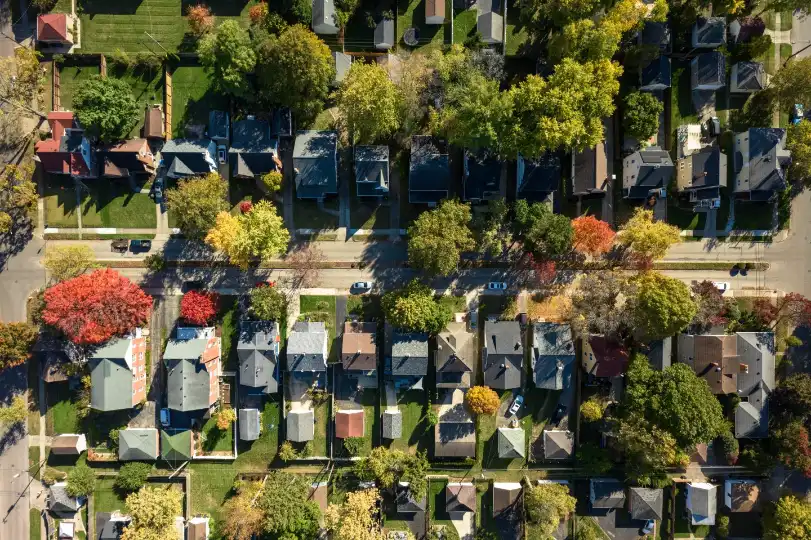
Gen Zers are flocking to these Midwest housing markets where homes are about 30% cheaper than the coasts
Younger generations are looking to the Midwest for homeownershipbecause of the region’s significantly lower housing costs compared to major coastal cities. Many Midwest metros have median home prices well below the national average, while also offering a lower cost of living. As a result, some Midwest cities have higher rates of young homeowners.Younger generations are typically associated with wanting to live a big-city lifestyle, but the high cost of housing on the coasts is driving Gen Z to consider other options. Recommended VideoThe Midwest is becoming a more attractive place to plant roots, considering housing costs there can be at least 30% cheaper than living in major coastal metros like New York City or Los Angeles. In fact, seven out of the 10 most accessible metros for young homeowners are in the Midwest, according to a ConsumerAffairs’ analysis of U.S. Census Bureau and Federal Financial Institutions Examination Council (FFIEC) data published July 29. The Midwest cities with the highest rates of homeownership under age 35 include: Omaha, Nebraska (18.2%)Grand Rapids, Michigan (21.1%)Des Moines, Iowa (19.8%)Wichita, Kansas (18.4%)Cincinnati, Ohio (17%)Minneapolis, Minnesota (16.5%)Akron, Ohio (14.2%)Minneapolis is also considered as one of the most affordable places to live, according to Zillow, along with other Midwest cities like St. Louis, Detroit, Indianapolis, Cleveland, Cincinnati, and Kansas City. All of these are cities where half or more of the homes for sale are considered affordable, according to Zillow, meaning housing consumes less than 30% of a typical household’s budget. Median home prices in many Midwest cities hover around $200,000 to $275,000, while the national median has crossed $400,000, Danielle Andrews, a realtor with Realty One Group Next Generation, toldFortune.That price gap can cut monthly housing costs by 30% to 50%, even before factoring in lower property taxes and insurance, she added. Why Gen Z is movingDuring the pandemic, many professionals moved to locations with more appealing weather and amenities while working from home. But now that many workers have been forced back to the office and housing costs have continued to rise, those cities don’t always make financial sense for homeowners anymore. Andrews said she’s worked with several Gen Z buyers—especially remote workers and young professionals—who are leaving higher-cost areas like Florida for more affordable housing.“For many, it’s not just about cheaper homes, but about being able to build wealth earlier without drowning in overhead,” Andrews said. She also cited a StorageCafe statistic showing Gen Z and millennials made up nearly 30% of all interstate movers, with states like Indiana and Wisconsin seeing some of the biggest gains. A Realtor.com analysis published Tuesday also shows suburban zip codes in the Midwest are heating up in 2025, meaning they’re getting attention through a mix of lifestyle appeal, relative affordability, and strong ties to nearby economic hubs.“The Northeast and Midwest dominate, driven by buyers from high-cost metros looking for relief without sacrificing access to jobs and amenities,” Realtor.com chief economist Danielle Hale said in a statement. “Many of these neighborhoods also offer newer homes than the surrounding areas, highlighting the critical role of new and infill construction in meeting today’s buyer demand—even in a tough market.”In its analysis of interest in areas that offer more space, more access to jobs, and better value, Realtor.com found that three of the 10 hottest zip codes are in the Midwest cities of Ballwin, Mo.; Strongsville, Ohio; and Bexley, Ohio. While these three cities have higher prices than their respective larger metro areas, their price points remain moderate on a national scale. Although home prices in the Midwest are rising, the region continues to be the most affordable homebuying region in the country, according to Redfin. Take Detroit, which has the lowest median sales price of any major metro at $180,000, Redfin data shows, or Cleveland at about $217,000. Both of these cities’ median home prices are roughly half of the overall U.S. figure. “Importantly, the cost of living [in the Midwest], especially for essentials like groceries, gas, and health care, is better aligned with local wages, allowing Gen Z buyers to not just get by—but actually get ahead,” Andrews said. “The Midwest is no longer just affordable: It’s aspirational for a generation redefining success.”Join us at the Fortune Workplace Innovation SummitMay 19–20, 2026, in Atlanta. The next era of workplace innovation is here—and the old playbook is being rewritten. At this exclusive, high-energy event, the world’s most innovative leaders will convene to explore how AI, humanity, and strategy converge to redefine, again, the future of work. Register now.

The ‘best time’ to buy a home is right around the corner. Here’s what you need to know
The housing market has been particularly brutal the past couple of years. While the pandemic ushered in an era of sub-3% mortgage rates, those climbed to levels peaking at 8% in October 2023. Current mortgage rates are still hovering around the low-6% range and home prices are 55% higher than they were at the beginning of 2020, according to the Case-Shiller U.S. National Home Price Index.Recommended VideoBut the U.S. housing market is slowly but surely moving in favor of buyers. Mortgage applications surged nearly 30% last week, according to the Mortgage Bankers Association. Home prices are also starting to plateau and even drop in some markets. “For prospective buyers who have been waiting on the sidelines, the housing market is finally starting to listen,” First American chief economist Mark Fleming wrote in an Aug. 29 First American post. Considering those factors, among others, the “best time” to buy a home this year is right around the corner, according to a Realtor.comreport published this week. Realtor.com says the week of Oct. 12-18 will be 2025’s “sweet spot” for home shoppers thanks to a “rare combination” of higher inventory levels, lower home prices, and less competition. For the report, Realtor.com analyzed six supply-and-demand metrics at a national and metro level that follow seasonal patterns using data from 2018 to 2024.“After years of constrained conditions, the 2025 housing market is giving buyers something they haven’t had in a long time: options,” Danielle Hale, Realtor.com chief economist, said in a statement. “I expect this market momentum shift to magnify typical seasonal trends that favor homebuyers in the fall.”While spring is historically considered the peak homebuying season, there is usually more competition and higher prices during that time of the year. Realtor.com data suggests there will be 32.6% more homes for sale than at the beginning of 2025, home prices could be up to $15,000 lower than a median-priced home during peak season, and there’s potential for 30.6% less competition than peak homebuying season during the week of Oct. 12-18.“In addition to the seasonal bump in inventory, it’s also a smart window to go under contract before the holidays,” Steph Mahon, owner of real-estate firm Dwell New Jersey, toldFortune. “By moving now, you can complete inspections, loan paperwork, and other due-diligence tasks ahead of Thanksgiving, avoiding the added stress of juggling it all during the holiday season.”Buying season varies by marketAlthough the overall best week to buy a home in the U.S. is Oct. 12-18, that timing varies some based on geography. The national “best week” applies to many metro areas like Houston, Los Angeles, and Washington, D.C., but some may be earlier or later, according to Realtor.com. Of the 50 largest U.S. metros, 45 will experience their best time to buy within a month of the national average. New York, Philadelphia, Chicago, Atlanta, and Dallas will see more buyer-friendly conditions starting in September.In Manhattan, “September happens to simultaneously be the month that experiences both the highest new supply to come on the market and the lowest contract activity volume being recorded,” Noah Rosenblatt, CEO and cofounder of real-estate analytics firm UrbanDigs, toldFortune. Florida markets including Miami and Tampa, however, can peak as late as December, Realtor.com data shows. In fact, Philadelphia and Milwaukee already had their “best weeks” from September 7-13. In South Florida, buying season “is coming both for seasonal renters who purchase, snowbirds and families who want to be in for the winter,” Jeff Lichtenstein, CEO and broker at Echo Fine Properties in West Palm Beach, toldFortune. “We’ve seen a three-and-a-half-year pent up demand period, so it’s just ripe.”Other early starts include Hartford, Conn., Memphis, Tenn., and Virginia Beach, Va. But for homebuyers looking in Charlotte, N.C., Louisville, Ken., Phoenix, Miami, or Tampa, November will likely be your best bet, according to Realtor.com data. “Get your preapprovals done and understand out-of-state contracts if making a move,” Lichtenstein said. “Expect more competition so the more ready you are, the less likely you are okay to pull the trigger and not lose a house.”Join us at the Fortune Workplace Innovation SummitMay 19–20, 2026, in Atlanta. The next era of workplace innovation is here—and the old playbook is being rewritten. At this exclusive, high-energy event, the world’s most innovative leaders will convene to explore how AI, humanity, and strategy converge to redefine, again, the future of work. Register now.
A gauge of future home sales just turned negative—despite 9 straight weeks of falling mortgage rates
Mortgage rates have been coming down, but there has yet to be a spike in homebuying activity—and one leading indicator has even declined.Recommended VideoPending home sales, or signed contracts leading up to a sale, fell for the first time in nearly three months, slipping about 1% during the four weeks ending Sept. 21 compared to a year earlier, according to a Redfin report on Thursday.That’s despite the weekly average mortgage rate sliding for nine consecutive weeks, hitting an 11-month low of 6.26% after reaching 6.8% at the start of the summer.Meanwhile, separate data from the National Association of Realtors on Thursday showed that sales of existing homes dipped 0.2% in August from the prior month. While they were up 1.8% from a year ago, the recent trend still points to a stagnant housing market.To be sure, lower mortgage rates have sparked a surge in at least one corner of the housing market. Redfin pointed out that mortgage applications to refinancehomes jumped 58% in the second week of September from the prior week.But mortgage-purchase applications edged up just 3%, and the anemic sales data are dashing hopes that cheaper borrowing costs will quickly jump start the housing market.Redfin highlighted four factors weighing on housing demand: still-elevated home prices, would-be buyers waiting for mortgage rates to go below 6%, muted supply of new listings, and economic uncertainty.Those waiting for mortgage rates to fall further may have already missed their chance, as borrowing costs have started to tick higher again.According to Mortgage News Daily, top-tier 30-year fixed rates were in the high 6.3% range on Friday, flat from the previous Friday but up from 6.1% range in the first half of last week.That’s as recent economic data have come in hot, lowering expectations for aggressive rate cuts from the Federal Reserve. As a result, Treasury yields have rebounded, lifting borrowing costs elsewhere, including mortgage rates.Meanwhile, job growth hasn’t been as robust as other indicators have been, casting gloom over the housing market. In addition, uncertainty about President Donald Trump’s tariffs and recession fears still linger, according to Redfin.“A lot of buyers are hesitating because they’re worried about potentially losing their jobs, losing money in their stock portfolio, and the economy in general,” said Josh Felder, a Redfin Premier agent in San Francisco, in a statement. “Many of the buyers who are moving forward are making offers with contingencies, and are willing to walk away during the inspection period if they don’t get the concessions they want.”Join us at the Fortune Workplace Innovation SummitMay 19–20, 2026, in Atlanta. The next era of workplace innovation is here—and the old playbook is being rewritten. At this exclusive, high-energy event, the world’s most innovative leaders will convene to explore how AI, humanity, and strategy converge to redefine, again, the future of work. Register now.

Americans say $74,000 a year is the ‘perfect salary.’ But that would make buying a house affordable in only two states
A $74,000 salaryis above the national median and enough to comfortably cover rent in most U.S. cities, but it still falls short of affording a median-priced home in nearly every state. Monthly mortgage payments often exceed the one‑third income threshold, even for households earning nearly double that “ideal” salary. Experts say the bigger obstacle isn’t just today’s mortgage rates, but persistently high home prices fueled by tight inventory and homeowners holding on to their low-rate mortgages.All things considered, $74,000 per year doesn’t sound like a bad salary. It’s about $12,000 more than the average salary in the U.S. and enough to afford $1,800 in rent in most major U.S. cities.Recommended VideoAmericans consider that amount of money to be the “perfect salary,” according to a recent survey of more than 2,000 U.S. adults by Talker Research. This is the average amount respondents said they would need in order to be happy, and half of respondents said the current amount of money they make isn’t enough to support their lifestyle, even beyond housing.While the average amount was $74,000, that’s not nearly enough to afford to buy a home in all but two U.S. states: West Virginia and Louisiana, according to Realtor.com—and even doubling that “perfect salary” to $148,000 won’t get you a house in every state.“Earning the ‘perfect salary’ may still fall short of affording a median-priced home in most states,” Hannah Jones, senior economic research analyst at Realtor.com, said in a statement.The median-priced new home in the U.S. costs more than $410,000, and an existing home will set you back more than $422,000, U.S. Census Bureau and National Association of Realtors data shows. And in states like California, Hawaii, Massachusetts, Colorado, and Washington, buyers can expect to shell out well over $600,000 to buy just a median-priced home.Assuming you purchase a home for $422,000, put down a conventional 20%, and your mortgage rate is about 6.5%, that means you’d end up spending nearly $2,500 on your monthly mortgage payment. That would be well over one-third of a monthly gross salary, which is generally discouraged. Most real estate experts warn against spending more than one-third of your salary on housing. But assuming a $148,000 salary, that $2,500 payment wouldn’t feel as overbearing—that is, if you have the ability to shell out on the down payment and can even find a home that meets your needs within that median price range. The biggest hurdles for U.S. homebuyersWhile much of the housing-market conversation has been focused on mortgage rates—which continue to hover in the mid-6% range—a sticky problem is home prices remain historically high. “It’s really the home prices that are the bigger hurdle,” Michelle Griffith, a luxury real-estate broker with Douglas Elliman in New York City, toldFortune. “Even if mortgage rates dropped to zero, the reality is that buying into the market … still requires a significant amount of cash upfront. Inventory is tight, and competition is high, so the cost of the property itself is what keeps most buyers on the sidelines.”Still, mortgage rates are a barrier for some buyers—especially those who recall the sub-3% mortgage rates of the pandemic era. It’s also the reason many current homeowners are staying in place and refusing to sell. “Many homeowners are reluctant [to] put their homes on the market and give up the low mortgage rates they already have,” according to Warren Buffett’s Berkshire Hathaway HomeServices. “To them, high price gains won’t mitigate their ability to pay more for another home at significantly higher interest rates.”Torsten Sløk, chief economist for Apollo Global Management, wrote in a Thursday note that housing supply is holding steady because current homeowners don’t want to sell and take on higher mortgage rates. Meanwhile, demand is slowing because home prices and mortgage rates remain relatively high. That could be somewhat good news about home prices.“The bottom line is that there is downward pressure on home prices coming from falling demand and rising supply,” Sløk wrote.While not by much, mortgage rates are also trending slightly lower during the past few months, and home-price growth is mostly flat or slightly declining. Improving housing affordability “will take time, likely years, [but] the balance of power is no longer as one-sided as it was during the pandemic frenzy,” wrote Mark Fleming, chief economist for financial services firm First American. “For those prospective buyers who have been waiting on the sidelines, the housing market is finally starting to listen.”Join us at the Fortune Workplace Innovation SummitMay 19–20, 2026, in Atlanta. The next era of workplace innovation is here—and the old playbook is being rewritten. At this exclusive, high-energy event, the world’s most innovative leaders will convene to explore how AI, humanity, and strategy converge to redefine, again, the future of work. Register now.
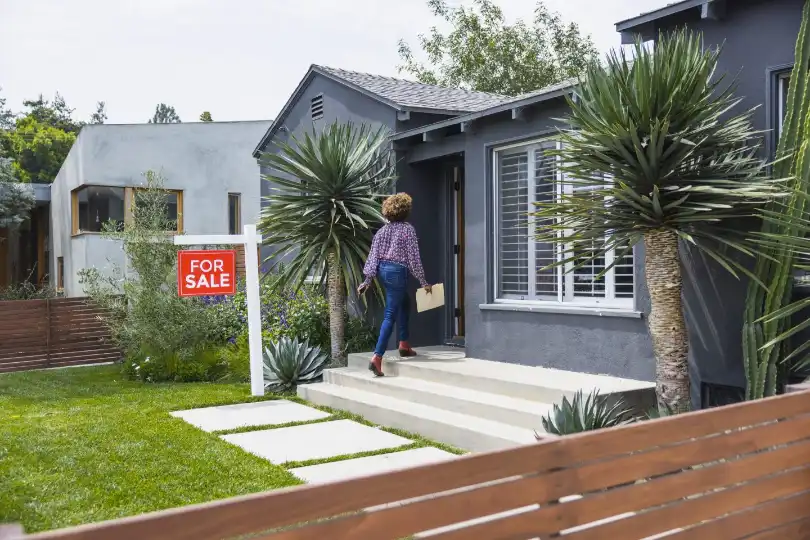
Home sales are headed for their worst year since 1995 as ‘economic jitters’ spread from buyers to sellers, Redfin says
There’s recently been a little bit of breathing room in the U.S. housing market as mortgage rates have slightly declined and home price increases have started to steady. But both buyers and sellers are still cautious. Recommended VideoFewer homeowners are putting their homes on the market: Active listings fell 1.4% in August, which represents the biggest monthly decline since 2023, according to a Monday report from Redfin. “High housing costs and economic jitters have rattled buyers, and that unease has spilled over to sellers,” Chen Zhao, Redfin’s head of economics research, wrote in the report. “We currently expect existing-home sales to end the year at around 4.05 million, or roughly flat compared to 2024, which was the worst year for sales since 1995.”The housing market is stuck in an unending circle of gridlock: Buyers aren’t inclined to purchase a home because mortgage rates and home prices are too high (they’re up 1.7% year over year at $440,004, according to Redfin). And homeowners don’t want to sell their homes to trade for a higher mortgage rate and out of fear they won’t get what they think their home is worth. That gridlock has forced some sellers to slash asking prices or pull their listings off the market altogether. Delistings—or taking a home off the market—jumped 47% nationally in June from a year ago, according to Realtor.com, and are up 34% year to date. “What we’re seeing nationally is a market that’s gradually rebalancing, with buyers gaining leverage and sellers facing a tradeoff: Adjust to the market and sell for less, or hold out and risk sitting indefinitely,” Realtor.com Senior Economist Jake Krimmel previously toldFortune. “Many sellers still aren’t pricing to sell.”Redfin data shows sellers have been pulling back because homebuyer demand is sluggish. In fact, sales are still far lower than even pre-pandemic levels, and the slight drop in mortgage rates hasn’t proven to be effective yet. “But that may change if rates continue declining; if we get a stronger-than-expected fall housing market, existing-home sales could end this year a little higher than last year,” Chen wrote.Redfin’s figures show mortgage rates fell to 6.59% in August, the lowest monthly average in 10 months. According to Mortgage News Daily, the 30-year fixed rate mortgage as of Monday is 6.35%, down from 7% in May.There is debate about the magic number it would take for buyers to be inclined to take out a mortgage. While Beth Behling, a Redfin Premier real estate agent in Chicago, said in a statement she thinks the magic number is 6%, others have said closer to 5% would make more of a meaningful difference. Zillow reported in early August it would take mortgage rates dropping to about 4.43% to make an average home affordable for a typical buyer—although the real estate site’s economic analyst Anushna Prakash said this was “unrealistic” considering the huge drop required to get there. “It’s unlikely rates will drop to the mid-[4% range] anytime soon,” Arlington, Va.-based real estate agent Philippa Main previously toldFortune. “And even if they did, housing prices are still at historic highs.”Join us at the Fortune Workplace Innovation SummitMay 19–20, 2026, in Atlanta. The next era of workplace innovation is here—and the old playbook is being rewritten. At this exclusive, high-energy event, the world’s most innovative leaders will convene to explore how AI, humanity, and strategy converge to redefine, again, the future of work. Register now.

In a frozen luxury housing market, buyers are asking to ‘try before you buy’ and having sleepovers in multimillion-dollar mansions
Luxury homeownersare increasingly struggling to sell at desired prices, prompting a rise in creative tactics like sleepover trials and steep price cuts. New taxes in areas like Los Angeles and Cape Cod make luxury transactions even more costly, forcing sellers to be more mindful and flexible with pricing strategies.In today’s luxury housing market, it’s become increasingly difficult to sell for what the homeowner might think the home is worth—and even high-profile sellers have been forced to drop prices on their megamansions. Recommended VideoBecause home prices and mortgage rates remain elevated, buyers are scrutinizing their purchases now more than ever. Plus, in several luxury housing markets, extra “mansion taxes” are tacked on, making purchasing costs even more expensive. So to woo prospective buyers, sellers are trying a new tactic: offering up sleepovers in their mansions to help seal the deal. Julian Johnston, a real estate agent with The Corcoran Group in Miami, said this is a trend he’s seeing more frequently in today’s luxury market as sellers and agents are forced to become more open to creative strategies like pricing adjustments and unique marketing campaigns to stand out. “In the luxury sector, where buyers often have the means and the time to wait for the right property, anything that sparks fresh attention and differentiates a home from its competition can help move the market forward,” Johnston toldFortune. The Wall Street Journalfirst reported about this trend earlier this week, offering the example of a $60 million mansion where the owner allowed an overseas couple to stay at the home for two months at $250,000 per month before putting in an offer. Eric Albert, the homeowner, toldWSJthe potential buyers wanted to be sure the home was comfortable for them and make sure it was a good size and layout for them.“For $60 million, you should try it before you buy it,” Albert toldWSJ.“It’s a smart thing to do.”While Johnston toldFortunehe’s not seeing it with the majority of listings yet, “it’s certainly gaining traction in high-end markets where buyers are more selective.”Other real estate experts, however, see this as potentially a move of desperation for sellers—and a signal some luxury homes are overpriced at the start. “Sleeping in the house to get a feel for it is one of the oddest concepts I’ve ever heard of,” Simon Isaacs, founder of Palm Beach, Fla.-based luxury firm Simon Isaacs Real Estate, toldFortune. “That doesn’t mean it won’t happen. Stranger things have happened.”The frozen luxury housing marketDuring the past couple of years, there have been several notable cases of high-profile people being forced to drop the price on their lavish luxury homes. In April 2024, billionaire media mogul Rupert Murdoch majorly slashed the price of his Manhattan penthouse by 40% to $38.5 million. Not only did that mean he ended up listing it for far less than he wanted, but he also ended up losing money because he bought the property for $57.9 million in 2014. Then this May, Jennifer Lopez and Ben Affleck slashed the price of their $60 million Beverly Hills megamansion by more than $8 million. Most recently, the billionaire founder of Oakley sunglasses became the latest victim of the sluggish luxury housing market by relisting his Beverly Hills mansion for $65 million, down from the original $68 million price listing from June 2024.These few examples go to show that while not fully out of a seller’s market, the tides are turning in favor of buyers as listings stay on the market longer and price cuts become more common, according to Realtor.com.“Square footage and celebrity status don’t justify inflated pricing anymore,” Anthony Luna, CEO of LA-based real-estate advisory Coastline Equity, toldFortune. “Buyers want smart design, upgraded systems, and long-term value.”Meanwhile, luxury buyers and sellers also have to contend with mansion taxes in some markets. The mansion tax in LA, for example, applies an additional 4% tax to property sales of at least $5 million and a 5.5% tax for properties north of $10 million, further complicating real-estate sales and pricing. The tax, which is typically paid by the seller, is separate from a home’s sale price and can be a “massive amount of money,” Selling Sunset star and Oppenheim Group agent Emma Hernan previously toldFortune. She described it as a “nightmare” for sellers and agents alike. One of the more recent examples of municipalities considering mansion taxes is Cape Cod. Already one of the most expensive housing markets in the U.S. where homes often exceed $1 million, according to Warren Buffett’s Berkshire Hathaway Home Services, it’s about to get more expensive for luxury homeowners. Cape Cod lawmakers are considering a tax on wealthy homeowners that would tack on an extra 2% surcharge on luxury-home sales above $2 million.Considering those factors, luxury homeowners will have to be more mindful than ever when pricing their properties. The reason there are so many price drops in the luxury sector is “they were mispriced in the first place,” Issacs said. “Everybody has an expectation of what their home is worth, and real estate brokers who are on the ground showing people every day have a better understanding of what people want, what people’s appetite is, and what things are spent on,” he said. “Some things they’re willing to spend [on], and some things they’re not.”Join us at the Fortune Workplace Innovation SummitMay 19–20, 2026, in Atlanta. The next era of workplace innovation is here—and the old playbook is being rewritten. At this exclusive, high-energy event, the world’s most innovative leaders will convene to explore how AI, humanity, and strategy converge to redefine, again, the future of work. Register now.